


Since 1898
Since 1898
*using high quality
domestic and imported parts

Are Adult Tricycles Stable? What Riders Should Know Before Buying One
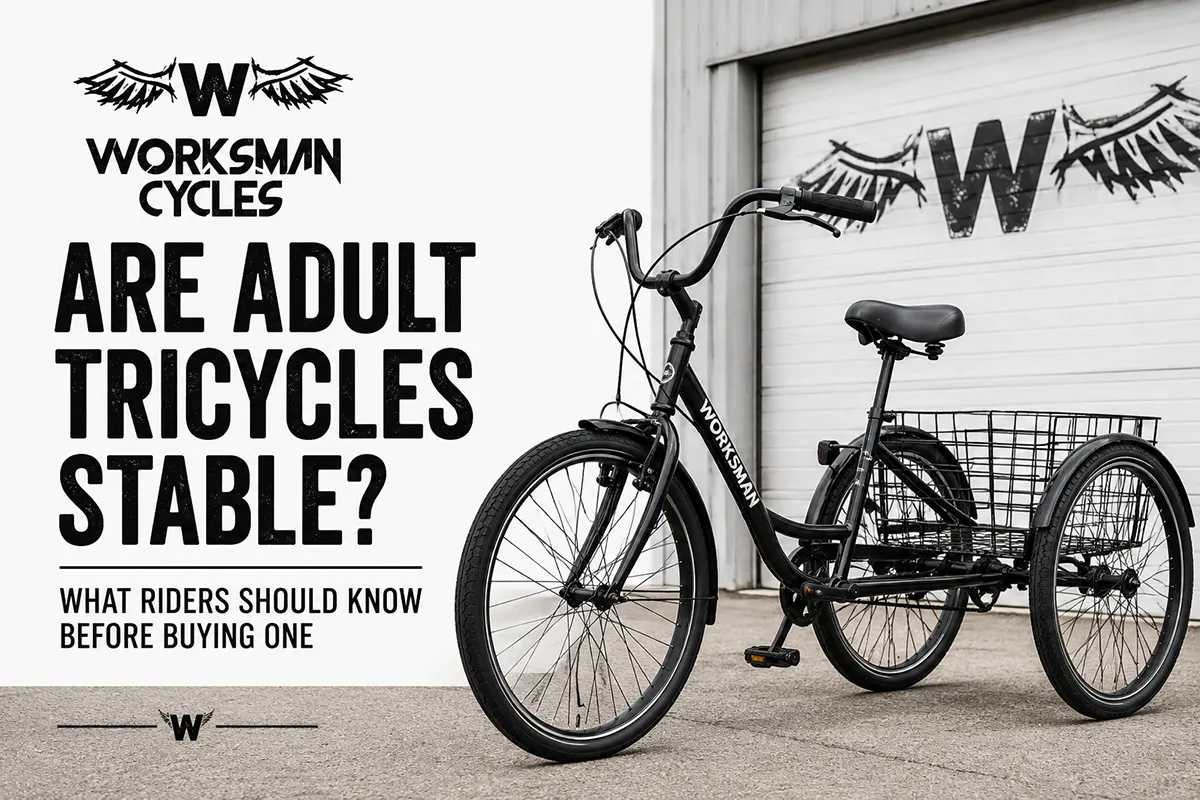
Adult tricycles appeal to riders who want a steadier alternative to a standard bicycle. Some riders no longer feel comfortable balancing on two wheels. Some shoppers are buying for a parent, spouse, employee, or facility where the bike needs to feel controlled while starting, stopping, turning, and carrying everyday items. The stability question matters because people are not asking only whether the bike stands upright. They are asking whether the rider will feel confident using it in real conditions.
The honest answer is that adult tricycles are stable in specific ways, but they do not handle like standard bicycles. A three-wheel layout supports the bike differently while stopped, starting, and riding straight. Turning changes the experience most because an upright tricycle does not lean through a turn the way a two-wheel bicycle does. That difference should shape how a rider thinks about speed, steering, cargo, fit, and the first ride.
Adult Tricycles Feel Stable in The Moments Many Riders Worry About
An adult tricycle gives the rider a wider support base than a standard bicycle. That is the main reason many people consider one after balance problems, mobility changes, or years away from riding. At low speeds, while stopping, and while riding in a straight line, the third wheel changes the experience because the rider is not relying on the same side-to-side balance required on two wheels. This is where adult three wheelers answer a real need.
That does not mean stability applies the same way in every condition. A tricycle that feels steady while moving straight might feel unfamiliar during a turn. A rider who expects the tricycle to behave like a bicycle with one extra wheel will notice the difference quickly. Good adult tricycle guidance should explain the difference before someone buys, because the first ride feels better when the rider knows what to expect.
Riding Moment |
Stability Impact |
Starting |
More support than two wheels |
Stopping |
Less balance demand |
Straight riding |
Steadier low-speed feel |
Turning |
Different handling |
Carrying cargo |
Load affects control |
Turning Is the Main Adjustment
Turning is the most important adjustment for new riders. A standard bicycle leans with the rider during a turn, while an upright adult tricycle stays more level. That means the rider needs to slow down before turning, take a wider path, and avoid sudden steering changes. This is basic tricycle handling, not an advanced technique.
This difference explains why some people feel confident riding straight but uncertain during the first tight turn. The tricycle is following a different handling pattern than the rider may be used to from years on a bicycle. The rider has to steer with that difference in mind, rather than leaning into the turn by habit. A few slow turns in an open area will teach more than a long first ride on a busy path.
What changes during turns
- The rider does not lean the same way as on a bicycle.
- Wider turns feel more controlled than sharp turns.
- Speed before the turn matters more than speed during the turn.
- Sudden steering makes the tricycle feel less predictable.
- Uneven ground makes turning feel less stable.
When Adult Tricycles Tip
Adult tricycles are not immune to tipping. Risk increases when a rider takes a sharp turn too fast, rides over uneven ground, makes sudden steering changes, or carries weight high or off-center. These situations matter because they affect the tricycle’s center of gravity and the way weight shifts during a turn. Three wheels help with balance in some riding conditions, but they do not remove the need for careful handling.
The most important habit is slowing before the turn. A rider should not enter a turn fast and try to fix the line halfway through it. Sharp steering at speed is exactly the type of movement that makes an upright tricycle feel less stable. Wider, slower turns give the rider more control and reduce the chance of wheel lift.
Tipping Factor |
What It Means |
Fast turns |
Less control |
Sharp steering |
More weight shift |
Uneven pavement |
Less predictable ride |
Sloped driveways |
More side load |
High cargo |
Higher center of gravity |
Off-center cargo |
Uneven handling |
Cargo Changes Stability
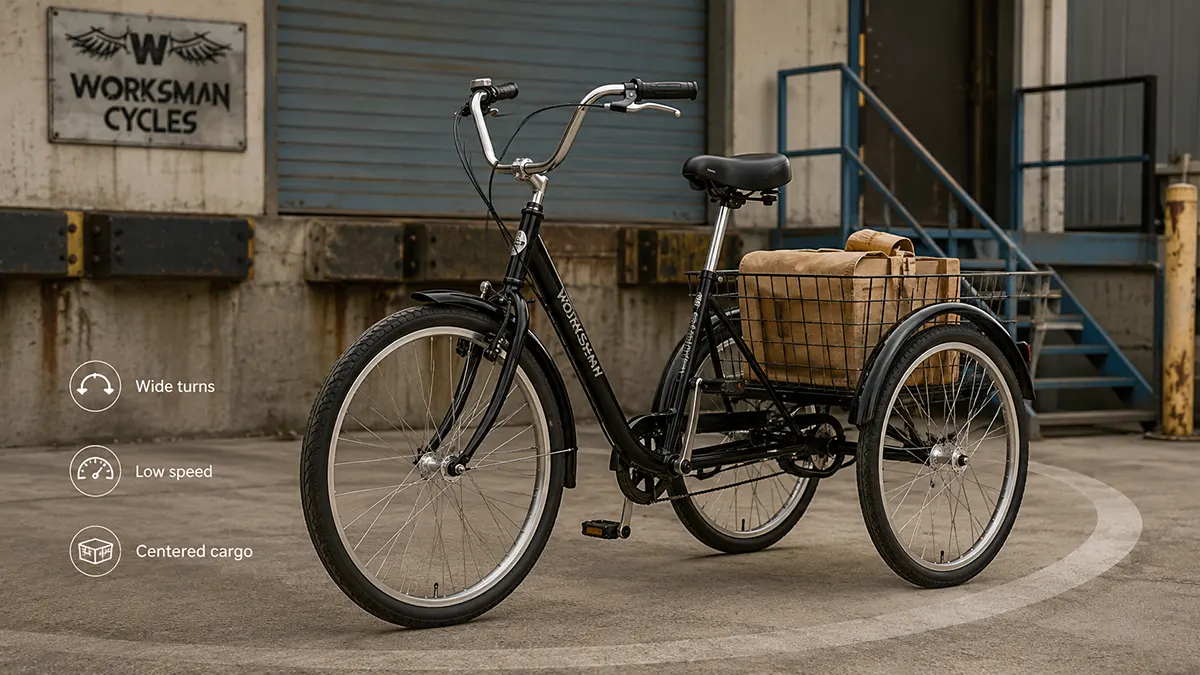
Many adult tricycles include a basket or cargo area so riders can carry groceries, bags, personal items, tools, or supplies. That feature is useful, but it also changes how the tricycle handles. A tricycle with an empty basket will not feel the same as one carrying a heavy or uneven load. The more weight a rider carries, the more important placement becomes.
Heavy items should sit low and centered whenever possible. A high load raises the center of gravity. A load pushed to one side changes how the tricycle feels in a turn. This matters for a rider going to the grocery store, and it matters when a tricycle is used for repeated work around a facility, campus, warehouse, or property.
Better cargo habits
- Keep heavier items low.
- Keep weight centered.
- Avoid stacking heavy items high.
- Avoid loading one side of the basket.
- Practice turning with light cargo before carrying heavier loads.
Fit Affects Stability Before the Tricycle Moves
A tricycle needs to fit the rider before it will feel stable in use. The rider needs to get on comfortably, sit securely, reach the handlebars, pedal without strain, and brake without stretching. Seat height, step-through height, handlebar reach, rider height range, and weight capacity all affect control. These details matter because stability starts before the first turn.
This is especially important when someone is buying for another person. A family member may focus on the idea of three wheels and assume the tricycle solves the problem. But if the rider struggles to mount the frame, reach the bars, or stop confidently, the tricycle will not feel controlled. A photo or feature list will not answer those questions by itself.
Fit Check |
Why It Matters |
Step-through height |
Mounting control |
Seat height |
Pedaling comfort |
Handlebar reach |
Steering control |
Brake reach |
Stopping confidence |
Weight capacity |
Safe use range |
Rider height range |
Proper fit |
How New Riders Should Test Stability
A new rider should not treat the first ride like a normal trip. The first ride should happen in a flat, open area with room to practice without pressure. The rider should begin with the tricycle empty, then practice starts, stops, and wide turns. Only after the rider feels comfortable should light cargo be added.
This sequence matters because it separates the basic handling feel from the added effect of weight. If a rider loads the basket immediately, it becomes harder to tell whether the tricycle feels unfamiliar due to steering, speed, cargo, or fit. Testing the tricycle empty first gives the rider a clean baseline. Adding cargo later shows how much the load changes handling.
First-ride sequence
- Ride empty in a flat open area.
- Practice starting and stopping.
- Make wide turns at low speed.
- Try tighter turns only after wide turns feel controlled.
- Add light cargo.
- Repeat starts, stops, and turns.
- Add more cargo only after the tricycle feels predictable.
Stability Checklist Before Regular Use
Before relying on an adult tricycle for errands, recreation, or repeated work use, the rider should know how it behaves in the conditions it will face. A short, controlled test helps reveal whether the tricycle fits the rider and the route. It also helps the rider understand the difference between straight-line confidence and turning control. That distinction matters more than any broad stability claim.
Use this checklist before regular riding:
- The rider gets on without strain.
- The rider reaches the handlebars comfortably.
- The rider brakes without stretching.
- The rider makes wide turns with control.
- The rider understands the turning radius.
- Cargo stays low and centered.
- The route does not force sharp turns at speed.
- The rider feels confident stopping and getting off.
What Stability Really Comes Down to for Adult Trikes
Adult tricycles are stable in situations that lead many people to consider them. They give riders more support than a standard bicycle while starting, stopping, riding slowly, and moving in a straight line. That support matters for older riders, people with balance concerns, casual riders, and anyone who wants a practical bike for short trips or carrying items.
But an adult tricycle is not a standard bicycle with one extra wheel. It turns differently, responds differently to cargo, and requires the rider to manage speed and steering with care. The most important buying mistake is treating “three wheels” as the complete answer to stability. The rider still needs the right fit, the right expectations, and enough practice to understand how the tricycle handles.
A good adult tricycle should feel predictable in the rider’s real conditions. That means slow turns, controlled stops, a comfortable fit, sensible cargo placement, and a route the rider understands. If those pieces work together, an adult tricycle gives the rider the steadier, more practical experience they were looking for.