



Since 1898
Since 1898
*using high quality
domestic and imported parts

Cargo Bikes Are a Proven Business Tool, Not a Trend
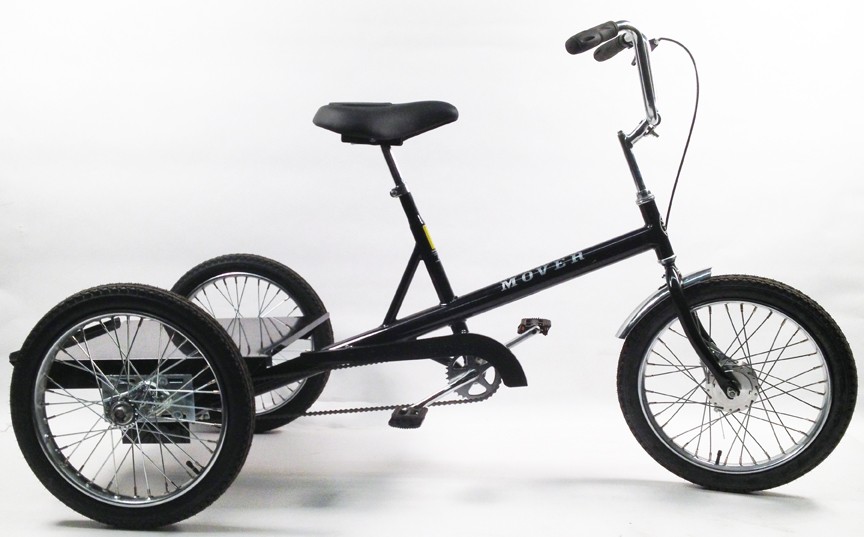 Cargo bikes exist in business because they solve work. They move people, tools, and products through environments where vehicles introduce costs, delays, and access issues. This is not a recent discovery. According to the Smithsonian National Postal Museum, freight and utility bicycles were widely used by postal carriers and tradespeople in the United States during the early twentieth century, long before motor vehicles became dominant for short-range transport. That historical use matters because it establishes cargo bikes as infrastructure, not novelty.
What has changed is not the bike. What has changed is the operating environment businesses now face. Urban density has increased. Curb access has tightened. Short trips now dominate daily operations. In that environment, cargo bikes have shifted from an alternative to a competitive advantage.
Why Cargo Bikes Are Becoming a Smarter Investment Right Now
Local business operations have become more constrained and more expensive. Federal transportation agencies increasingly describe urban freight movement as inefficient precisely because vehicles are poorly suited for short, frequent trips in dense areas. The Federal Highway Administration, which studies freight and congestion patterns nationwide, identifies curb access, parking delays, and stop density as primary drivers of lost productivity in urban logistics.
Cargo bikes function inside these constraints rather than fighting them. They operate without parking dependency. They move continuously instead of cycling between motion and idle time. They avoid many regulatory and spatial barriers placed on vehicles. These conditions explain why adoption is accelerating now, not because bikes improved, but because the cost of using vehicles for local work has risen.
The Three Business Frictions Cargo Bikes Remove
- Cost friction: Vehicles carry fixed expenses regardless of distance. Fuel, insurance, registration, depreciation, and complex maintenance accumulate even on short trips. Cargo bikes eliminate most of these costs. According to the National Renewable Energy Laboratory, which tracks transportation energy and operating data for the U.S. government, short vehicle trips are disproportionately expensive per mile due to idling and overhead costs. Cargo bikes replace those trips with minimal, predictable operating costs.
- Time friction: Short stops punish vehicles. Parking searches, loading zones, and walking distance reduce completed work per hour. Academic research from the University of Westminster on urban logistics performance has shown that cargo bikes often complete deliveries faster than vans in dense environments because they reduce parking time and maintain direct access to destinations. Time efficiency improves even with smaller payloads.
- Access friction: Many work environments restrict vehicles by design. Campuses, factories, pedestrian corridors, and dense neighborhoods favor smaller movement. The U.S. Department of Transportation acknowledges that non-vehicle delivery modes outperform traditional vehicles in areas with limited curb access and pedestrian priority zones. Cargo bikes function where vehicles cannot, turning access into an advantage instead of a barrier.
The Businesses That Gain the Most From Cargo Bikes
Certain operating patterns benefit more than others.
- Local delivery businesses experience immediate gains because short routes and frequent stops amplify vehicle inefficiencies. Florists, pharmacies, bakeries, and neighborhood retailers often spend more time on parking and congestion than on travel itself.
- Mobile service and repair businesses benefit similarly. Technicians moving tools between nearby jobs lose time managing vehicles rather than performing work. Cargo bikes carry equipment directly to the job site and tighten schedules.
- Industrial and campus operations rely on constant internal movement. Warehouses, factories, hospitals, and universities cover large areas with restricted vehicle access. Cargo bikes move staff and materials faster than walking and more flexibly than carts or trucks.
- Food delivery and commissary logistics depend on density and speed. Short routes and time-sensitive payloads favor bikes, especially where vehicle access is limited.
Research from the Brookings Institution, which studies urban economic systems, consistently identifies these categories as most constrained by vehicle access and congestion. That constraint explains why cargo bikes deliver outsized gains in these settings.
How to Choose a Cargo Bike That Actually Works for Business
Cargo bikes only function as an investment when the equipment matches the work. Selection should begin with the job, not the product. Load weight, volume, frequency, and distance define the requirements.
- Environment follows: Flat terrain supports non-electric setups. Hills, heavier loads, or longer routes justify electric assist. Indoor or dense spaces favor stability and control.
- Platform choice matters: Two-wheel cargo bikes prioritize maneuverability and narrow access. Three-wheel cargo trikes prioritize stability and payload. Neither is universally better. Each fits different operating conditions.
- Durability protects return on investment: Guidance from the Occupational Safety and Health Administration and the National Institute for Occupational Safety and Health emphasizes stability, load limits, braking, and ergonomics when selecting material-handling equipment. These principles apply directly to cargo bikes used for work. Frame construction, wheel strength, braking systems, and serviceability determine whether a bike survives daily use or fails prematurely.
Operational planning completes the decision. Storage, locking, charging, and maintenance routines determine consistent use. Successful deployments treat cargo bikes as fleet assets, not accessories.
Five Reasons Cargo Bikes Outperform Vehicles for Local Work
- Predictable daily costs: Operating expenses remain low and consistent because fuel, insurance, and complex maintenance are removed from the equation.
- Faster short-range movement: Reduced parking time and continuous motion increase completed tasks per hour in dense environments.
- Reduced downtime and maintenance: Mechanical simplicity limits failure points, a priority emphasized in fleet management guidance from the U.S. General Services Administration.
- Access where vehicles fail: Cargo bikes function in spaces designed for people, including campuses, sidewalks, and indoor facilities.
- Long-term durability when built correctly: Equipment designed for industrial use maintains value and reliability over time, which determines whether savings persist.
When Cargo Bikes Are the Right Answer
Cargo bikes succeed when work is local, frequent, and constrained by cost, time, or access. They fail when distances are long, loads are extreme, or speed outweighs efficiency. Recognizing that boundary strengthens the decision.
Transportation agencies increasingly frame cargo bikes not as replacements for all vehicles, but as highly efficient tools within specific operational ranges. When those conditions exist, cargo bikes stop being an alternative and start being the smarter choice.