


Since 1898
Since 1898
*using high quality
domestic and imported parts

Do Cargo Bikes Work for Urban Businesses?
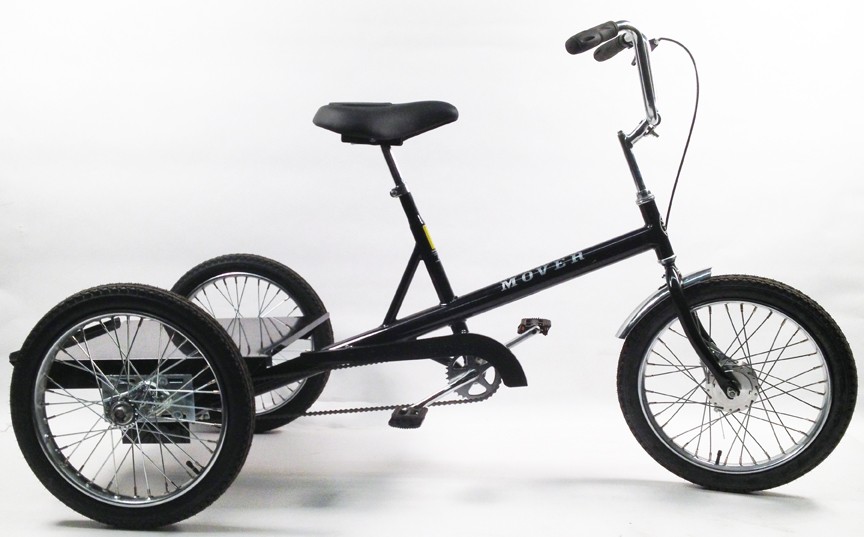 At Worksman Cycles, we look at that question the same way many business owners do: can the vehicle handle the route consistently, carry the real load, and keep the workday moving without adding new friction?
Yes, cargo bikes can work very well for urban businesses, but only under the right operating conditions. They’re strongest when the job involves short routes, dense stop patterns, manageable loads, and constant parking friction. They get weaker when the service area spreads out, the payload gets bulky or heavy in ways that hurt handling, or the business depends on long runs where vehicle speed starts to matter more than curb access.
What “Work” Actually Means
That answer only helps if “work” means something specific. In this context, cargo bikes work when they can consistently complete the route, carry the real load without turning every trip into a compromise, keep labor time under control, and create an operational advantage rather than just sounding efficient on paper.
If a bike can make the stops but requires too many reloads, too much rider effort, or too much route planning to stay dependable, it doesn’t really work as a business tool. The right question isn’t whether cargo bikes can move goods. The real question is whether they can handle your actual workflow better than a vehicle can.
Route Density Usually Decides the Answer First
For many urban businesses, the first condition that decides the answer is route density. Cargo bikes shine when stops are close together. A florist making repeated drops inside a compact downtown district, a maintenance team moving supplies across a campus, or a food business handling neighborhood deliveries can gain real time because the operator isn’t circling for a legal place to stop at every address.
A recent Boston Metropolitan Planning Organization (MPO) report notes that cargo e-bikes perform best in dense last-mile work, where short distances and high delivery density match the vehicle’s strengths. That same report cites evidence that cargo e-bikes completed deliveries 1.61 times faster than vans in congested areas of London.
Parking Friction Can Change the Whole Comparison
Parking friction is one of the biggest reasons cargo bikes can outperform vehicles in city operations. A van may have a higher top speed, but that advantage disappears quickly when the driver loses time hunting curb space, double-parking, walking from a legal spot, or dealing with restricted access. The Boston MPO report notes that, in one study, commercial vehicles cruising for parking accounted for 28 percent of total trip time on average. That’s an enormous tax on productivity. In the same dense environments, cargo bikes reduce reliance on scarce curb space and enable more efficient repeated stops than vans or trucks.
Frequent Stops Favor Bikes More Than Long Runs Do
Stop frequency matters just as much. The more often a route requires getting on and off the vehicle, the stronger the case for a cargo bike becomes. Researchers studying a UPS cargo e-bike pilot in Seattle found that parking durations were short, the distance from the bike to the delivery address was typically under 100 feet, and operators generally made one delivery per stop. That sounds simple, but it’s exactly the kind of pattern that favors a bike. If the route is built around constant, short service interactions, a large vehicle starts carrying a lot of dead time.
Load Type is Where the Easy Sales Pitch Breaks Down
Load type is where buyers need to be honest with themselves. Cargo bikes can carry meaningful payloads, and they aren’t just for envelopes or tiny parcels. They can handle loads over 100 pounds, and the Seattle UPS pilot used an electric-assisted tricycle with a removable container offering 95 cubic feet of space and up to 400 pounds of capacity.
Those are real business numbers, not novelty numbers. But capacity on paper isn’t the same as fit in practice. Dense, compact, stable goods are one thing. Awkward items, fragile products, loads that shift, or deliveries that require a large protected cargo volume are other examples. The question isn’t just “How much weight can it hold?” It’s also “Can this load be secured, handled safely, and unloaded repeatedly without slowing the operator down?”
Volume Problems Can Show Up Before Weight Problems Do
That’s why load volume can break the model even when weight doesn’t. A route may involve items that are individually light but physically bulky enough to reduce efficiency. Once the cargo shape starts limiting maneuverability or forcing too many return trips, the bike’s time advantage disappears. Businesses sometimes focus on the cost or appeal of replacing a vehicle without checking how many trips the bike will need to finish the same route. If the answer is two or three, the bike may still help as a partial fleet tool, but not as a true vehicle replacement.
Delivery Radius Still Sets a Hard Limit
Cargo bikes are strongest in tight service areas. The Seattle pilot highlighted one of the tradeoffs clearly: limited cargo capacity means fewer deliveries per tour and more frequent reloads. At the same time, a lower maximum speed reduces the bike’s ability to cover longer distances quickly. In that pilot, the permitted operating speed was capped at 20 miles per hour. That isn’t a problem in a compact downtown pattern where the next stop is close, and traffic is slow anyway. It becomes a problem when the route spans a wider city area, crosses long arterial corridors, or mixes dense and sparse neighborhoods in a single shift.
Infrastructure Can Help or Undercut the Whole Plan
Infrastructure also decides a lot. Cargo bikes do better where the rider can move through the city without constant conflict. The Boston MPO report notes that regulatory rules and street design affect feasibility, including whether cargo bikes can use bike lanes or loading zones. The Seattle study also showed that operators often relied on sidewalks and travel lanes, with bike lane use increasing when lanes were protected.
That tells you something important: the route doesn’t just need demand. It needs workable street access. A business can have the right load and stop pattern, then still run into trouble if the physical network makes the route stressful, unsafe or inconsistent.
When Cargo Bikes Stop Being Practical for Urban Businesses
So, where do cargo bikes stop being practical? They stop making sense when the route depends on speed between far-apart stops, when loads are too bulky or too variable, when weather exposure creates too much product or labor risk, when hills or street conditions wear down consistency, or when reload logistics become more complicated than just using a vehicle. They also stop being a clean substitute when a business needs one machine to do everything. Cargo bikes are often excellent specialists. They aren’t always good universal replacements.
We Can Help You Make the Best Decision for Your Specific Company’s Needs
For businesses looking at cargo bikes as a working tool, the real decision isn’t whether the concept sounds appealing. It’s whether the route, load and service area are tight enough to justify the switch. That’s the same practical standard we bring to cargo bike design at Worksman Cycles.