


Since 1898
Since 1898
*using high quality
domestic and imported parts

How Much Money Can a Commercial Cargo Bike Save Your Business vs. a Delivery Van?
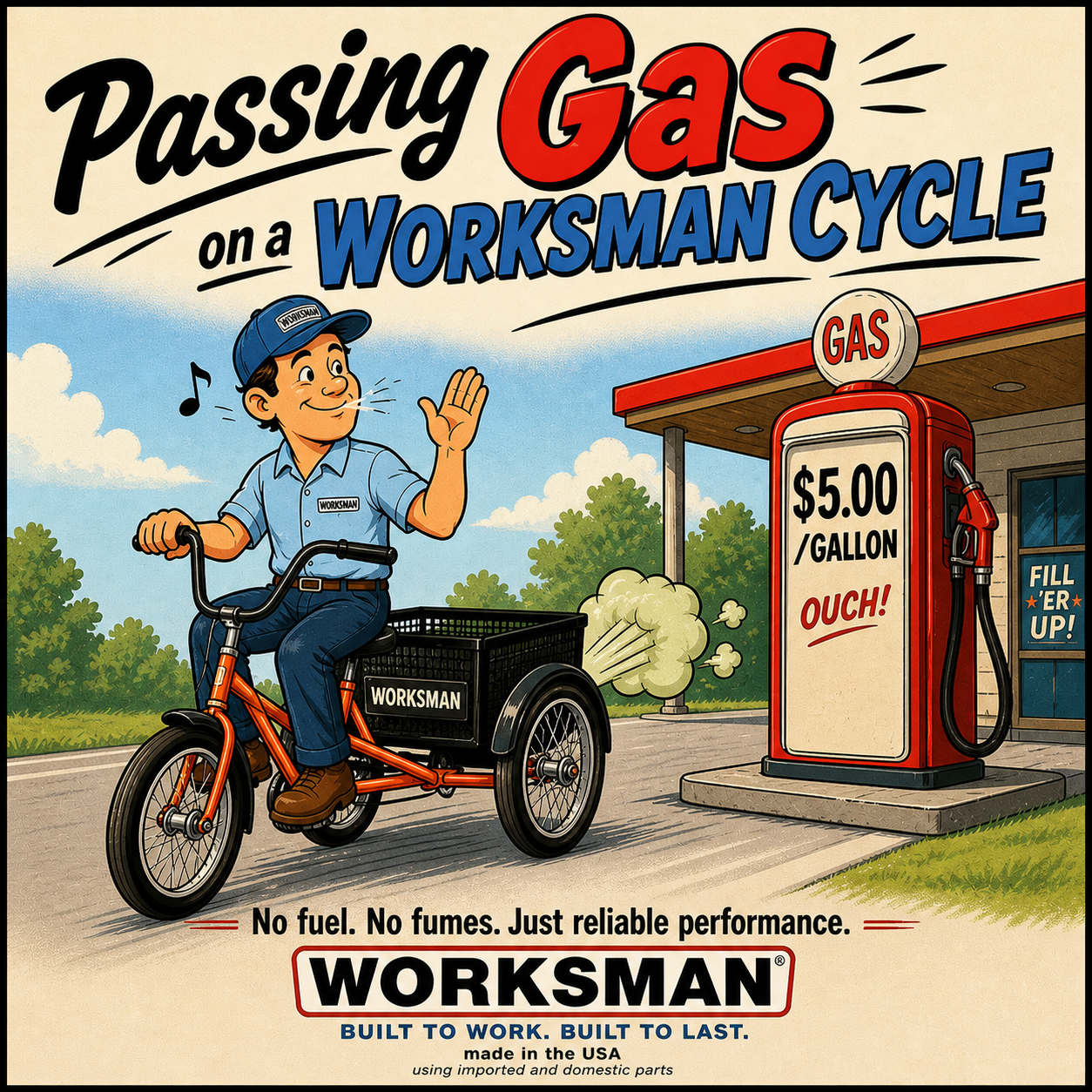
 Operating a delivery fleet in a dense city is no longer just a logistical challenge—it is a massive financial liability. Replacing a traditional delivery van with an industrial-grade cargo tricycle fundamentally restructures your balance sheet, drastically reducing operational overhead and protecting your profit margins.
Swapping a traditional delivery van for an industrial cargo bike immediately halts capital bleed. By eliminating daily fuel costs, commercial auto insurance premiums, and urban parking tickets, businesses retain thousands of dollars in revenue per route each year. Before taking on the overhead of another motorized vehicle, fleet managers must weigh these three financial realities:
- The Payload-to-Cost Ratio:A $1,500 heavy-duty cargo trike carries 25% of the payload of a $45,000 delivery van at just 3% of the initial cost.
- Faster Delivery Times:Can complete urban deliveries up to 50% faster than vans by utilizing bike lanes, bypassing gridlock, and completely eliminating the time wasted searching for parking.
- Erased Urban Taxation:Fleet managers face average monthly parking fines of $500 to $1,000 per delivery van in major cities—a liability instantly neutralized by deploying a fleet of legally classified bicycles.
Why Delivery Vans Are Draining Your Profits
For fleet managers, facility directors, and local business owners, using traditional gas or electric vans for local deliveries simply does not make financial sense anymore. According to research published by the National Renewable Energy Laboratory (NREL), short vehicle trips in urban areas are disproportionately expensive per mile due to engine idling, high fuel consumption in stop-and-go traffic, and overarching administrative overhead.
The real cost of a motorized fleet doesn't begin and end with the sticker price of the vehicle; it is the compounding, uncontrollable daily operating expenses that actively eat away at your profit margins. When you judge a vehicle strictly by how much it costs to move a given amount of weight, deploying heavy-duty commercial cargo bicycles emerges not as green PR, but as a ruthless, hard-math cost-cutting tool.
Upfront Costs: Getting 25% of the Payload for 3% of the Price
The financial risk of a van-based delivery fleet begins the moment you buy the vehicle. According to automotive market analysts at Kelley Blue Book, the upfront cost to procure a standard commercial van, such as a Ford Transit, typically ranges between $35,000 and $55,000. Electric versions routinely exceed $60,000 before you even pay for the expensive charging stations. Once purchased, these vehicles lose value rapidly. Data from Edmunds' "True Cost to Own" index shows that commercial vans depreciate by $11,000 to $13,685 over a standard five-year lifespan.
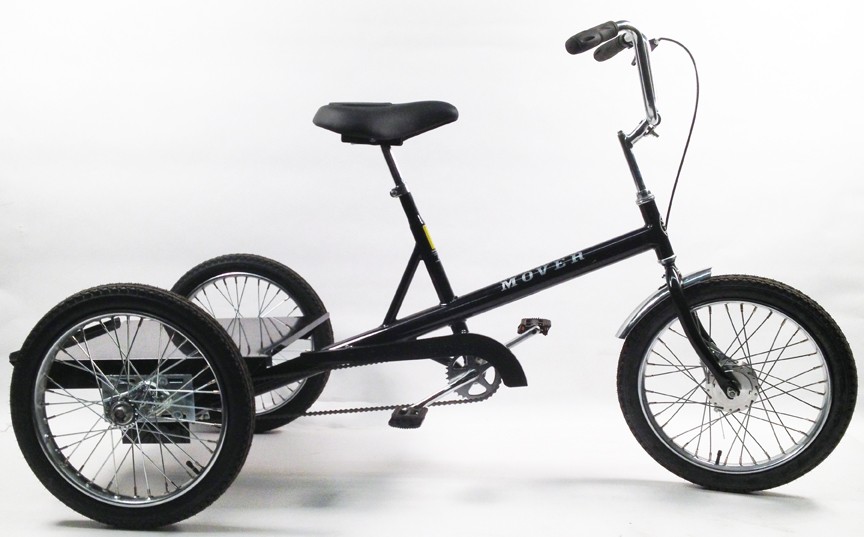
Conversely, a premium, heavy-duty industrial tricycle like the Worksman Mover requires a conservative baseline of roughly $1,500. A fleet manager can buy an entire fleet of twenty cargo trikes for the same price as a single baseline van. Furthermore, because practically every mechanical component on an industrial trike can be cheaply replaced, the bike can be kept on the road indefinitely, effectively preventing it from losing value over time.
Slashing Daily Operating Costs: Fuel and Maintenance
If the purchase price is the initial hurdle of fleet management, the daily operating expenses are the silent margin killers that scale up with every mile driven.
- Fuel & Energy Costs:According to the American Automobile Association's (AAA) annual driving costs data, fueling a standard delivery van averages between $2,760 and $3,100 annually. Over a typical 100-mile delivery day, a van will consume $17 to $25 in fuel. For the exact same distance, charging the battery on a heavy-duty electric-assist cargo bike costs roughly $0.30. This represents an astonishing 90% reduction in direct fuel costs.
- Mechanical Breakdowns:Edmunds' fleet analytics indicate that five-year routine maintenance costs for a commercial van easily exceed $6,600, and a major failure (such as a blown transmission) can wipe out thousands of dollars in an instant. A heavy-duty cargo bike features no complex transmission, no exhaust system, and no computer chips. Annual maintenance drops to a negligible $200- $500 and can be performed on-site by your facility staff.
Do I need commercial auto insurance for a cargo bike?
Answer: No. Because commercial cargo bicycles are legally classified as bicycles, they bypass the Department of Transportation (DOT) motor vehicle rules entirely. You do not need a commercial driver's license or mandatory commercial auto insurance policies. According to the commercial insurance brokerage Insureon, insuring a single delivery van routinely costs between $1,200 and $8,000 annually, depending on liability exposure and location. Eliminating this one expense alone claws back massive amounts of lost revenue.
Eliminating the Cost of Parking Tickets
Even if a delivery van ran on free gas and didn't need insurance, it still faces the constant financial drain of city parking fines. In modern cities, commercial curb space is fiercely contested, forcing van drivers to double-park in traffic lanes just to execute deliveries.
This is not an incidental cost; it is an institutionalized tax. An investigative report published by The New York Times found that in 2019, New York City collected an astonishing $23 million in parking fines from UPS and an additional $9.8 million from FedEx. Overall, urban freight analytics indicate that commercial carriers routinely face average monthly parking fines of $500 to $1,000 per delivery van in major cities.
An industrial cargo bike completely neutralizes this problem. Because of their compact size and legal classification, cargo bikes bypass the competition for loading zones entirely. They can be legally parked on wide sidewalks, chained to bike racks, or rolled directly into freight elevators, instantly erasing up to $12,000 in annual parking liabilities per route.
The Hard Math: Commercial Van vs. Industrial Cargo Trike
To fully comprehend the financial difference between motorized and human-powered logistics, fleet managers must look at the true five-year cost of ownership.
Operational Expense (Annual Estimate) |
Standard Commercial Delivery Van |
Worksman Industrial Cargo Trike |
Initial Acquisition |
$45,000 |
$1,500 |
Fuel / Energy |
$3,000+ |
$100 (Electricity/Charging) |
Commercial Auto Insurance |
$2,500 - $6,000 |
$0 |
Routine Maintenance |
$1,300+ |
$200 - $500 |
Municipal Parking Fines |
$6,000 - $12,000 |
$0 |
Total 5-Year Operating Cost (Excluding Purchase) |
$64,000 - $106,500 |
$1,500 - $3,000 |
What is the payload capacity of an industrial cargo trike?
Answer: A heavy-duty industrial cargo tricycle features a true maximum payload capacity of 500 to 550 pounds (including the rider).
While a standard Ford Transit offers a higher theoretical weight limit, urban parcel delivery vans frequently run out of physical space long before they reach their maximum weight. Paying the astronomical costs of a multi-ton vehicle just to transport 300 pounds of cardboard boxes across town is fundamentally inefficient.
However, moving a 500-pound payload on a bicycle requires serious, heavy-duty construction. Standard consumer-grade bikes will experience frame failure under commercial loads. The Worksman Mover achieves its massive capacity through a purpose-built design: a fully welded 11-gauge steel frame, a 7/8" machined solid steel rear axle, an extra-thick 3/16" industrial chain, and exclusive clincher rims laced with massive 11-gauge steel spokes.
Can delivery cargo bikes use standard bike lanes?
Answer: Yes. Commercial cargo bikes are legally permitted to use municipal bike lanes, which drastically reduces delivery times by bypassing automotive traffic.
In dense cities, a vehicle's top speed doesn't matter; your speed is dictated entirely by traffic lights and gridlock. Real-world evidence proves cargo bikes significantly outperform vans in urban cores. A comprehensive logistics study published by the University of Westminster in London revealed that electric cargo bikes completed up to 50% more delivery stops per hour than vans.
A parallel study conducted by the Belgian Cycle Logistics Federation, which analyzed over 32,000 deliveries across 345 routes, corroborated these findings. By slipping through dedicated bike lanes and permitted pedestrian zones, cargo trikes keep moving while vans sit in traffic. Furthermore, the Belgian study noted that because cargo bikes park an average of just 30 meters from the final delivery door (compared to vans that must circle blocks to find a spot), the time required to drop off a package was reduced by 51%.
Where Cargo Bikes Work Best (And Where They Don't)
To make the best financial decisions, fleet managers have to be honest about what a vehicle can and cannot do. A heavy-duty cargo bike will not replace a delivery van for a 50-mile highway route, nor can it transport a 2,000-pound pallet of machinery.
However, recognizing this limitation highlights exactly where the vehicle shines: a cargo bike will financially outperform a van in dense, 3-mile urban areas or within large industrial complexes. Global manufacturing titans (including Boeing, Ford, and American Airlines) have successfully retired gas-powered utility carts in their sprawling facilities, replacing them with fleets of Worksman industrial tricycles to eliminate fuel costs and indoor toxic battery fumes. Similarly, urban logistics firms are swapping vans for trikes on tight inner-city routes, saving their expensive motorized vans for long-haul freight jobs where they actually generate a positive return.
The Best Tool to Protect Your Bottom Line
The decision to integrate industrial tricycles into a commercial fleet is a smart, bottom-line financial maneuver. Operating a traditional delivery van subjects a business to a relentless barrage of capital destruction, driven by steep purchase prices, high fuel costs, and constant parking fines.
By offering 25% of a commercial van's payload capacity at just 3% of the total financial cost, the heavy-duty industrial cargo bike solves this problem entirely. For the fleet manager or local business owner tasked with protecting profits in an increasingly expensive world, an industrial-grade tricycle isn't just an alternative vehicle—it is the ultimate business tool.